How to Find a Music Manager: An Interview with Perry Davis

Marketing Director & Bass Music Mentor
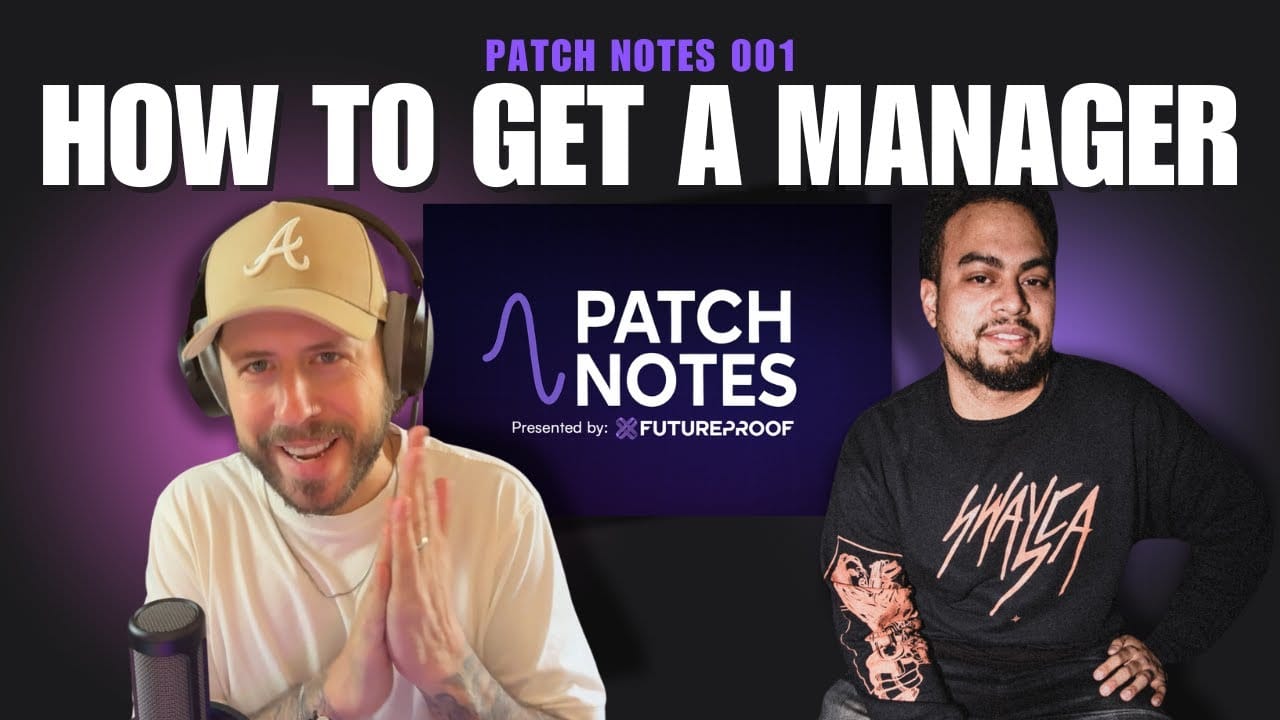
What's up everyone. Welcome to the first episode of Patch Notes, the Futureproof Music School video podcast where I sit down with people who actually move the needle in this industry. Tonight I had my good friend Perry Davis on, who co-founded 24/8 Management out of Nashville. Perry's roster is stacked: Spag Heddy, Herobust, Ivory, Viperactive, and a bunch more. We talked about how to get a manager, what managers are actually looking for, how the come-up really works, and how to become a manager yourself.
Watch the full interview below, then read on for the highlights.
The "overnight success" myth: how Viperactive actually broke
I started by asking Perry about Viperactive, who feels like he came out of nowhere this past year. As a fan, when you witness an artist break, it feels instant. The reality is rarely that.
Perry: "I became aware of Viperactive through another one of my clients, Spag Heddy, who's a huge fan of his. This was a couple years ago. Spag wanted to do a collab with him, and they ended up doing 'In Vain' on Monstercat. At the time, Viperactive was just making dubstep stuff. It was sick, but nothing really stood out from the crowd. This was 2018, 2019, when things were getting a little stale. So I was kind of just whatever about it."
"He went away for a while, owned his sound, and built this whole new Viperactive wave. End of 2022, beginning of 2023 we reconnected. He showed me his new music and walked me through the project. I was just blown away. That's when I told him, 'I think there's something here. Let's see what we can do.'"
The thing about overnight success is that the part you see is the visible 5%. Viperactive has been making music full-time since he was 13. He spent years on Fiverr cranking out 70 beats a month for clients. He has YouTube videos from way back showing his drum-pad workflow that he's still using now. None of that work was visible to fans before he broke. All of it was the reason he could break.
On side hustles and ghost production
If you want to dig into the actual craft side that backs all this up, our deep dives on Reese bass sound design and mixing and mastering dubstep are starting points.
If you want to be in the music industry but you don't yet have a touring income, you'll probably end up doing some kind of side hustle: Fiverr beats, video game audio, sync work, ghost production. Perry's take on whether that's good or bad for your craft:
Perry: "If you're looking to be an artist and you want to get better at your craft, it just takes practice. However that practice comes to you, you should accept it. Whether it's Fiverr or video games or whatever, anything you can do to further your knowledge is going to be helpful."
The thing nobody tells you is that writing music for someone else, on a deadline, to a brief, develops a different muscle than writing for yourself. Charma was watching the stream and confirmed it from her own Fiverr work — she's a better songwriter for the time she's spent writing on demand. Viperactive is a faster, sharper producer for it.
Content, social media, and the necessary evil
I asked Perry the question every artist asks: what platforms move the needle, and what kind of content actually works?
Perry: "There's no specific bit that moves the needle the most. It's more about the quality of what you're putting out. A lot of content nowadays is cookie-cutter. When I'm scrolling and I see the same video from seven different artists, I just flip past it. If something's eye-catching, unique, or a little more artistic, I'll give it a second look."
"Instagram and TikTok are best for discoverability. Twitch is great for community — face-to-face with your fans, like we're doing right now. Twitter and Threads are conversation spots. The content that works on TikTok won't work on Twitter, so think about the platform when you build the strategy."
The honest reality:
Perry: "I don't know a single artist who likes social media. None of them. They all do it because it's a necessary evil."
The most important and hardest part of social content is being authentic. Two examples we landed on:
- ATLiens wear masks, so they get to do all kinds of weird, interesting visual content without having to be on camera as themselves. Their team is also genuinely good at marketing.
- Amorphic does what looks like nothing — just DJing, headbanging in front of a camera — but he's so clearly all-in on what he's doing that it pulls you in. One song. One vibe. Real.
The cookie-cutter version of "production tip + dance + waveform overlay" works as low-hanging fruit, but it puts you in the same algorithmic class as everyone else doing it. The way through is finding the thing that's actually you and doing it really well.
What makes a manager say yes
This was the question I most wanted to ask. Perry's been doing this for 15 years. What stood out about Viperactive that made him sign?
Perry: "He had a clear and concise vision for where he was at, where he wanted to go, and how to get there. That made it easy on me. I didn't have to come up with the plan. He had it. Every time I had a question, he had a full answer. He knew what he wanted to do."
I ask every artist I'm pursuing about their two-year goals and their ten-year goals. Most artists give me the same two-year list: tour with Excision, play Lost Lands, do shows with Sudden Death. Those are fine goals to have, but they're what every other artist also wants. What's interesting is when an artist can tell me what effect they want their music project to have on the world. That's the rarer thing.
The other green flag, and this one is huge:
Perry: "If you can say no to a show, you're already in the right headspace. So many new artists rush into doing shows. They take a slot opening for a mid-headliner, do 75-100 tickets, and that doesn't translate to long-term success. If you do that too early, you're shooting yourself in the foot. Your value as a touring artist comes from your headline ticket value, not from being the perpetual support act."
You can't teach work ethic and you can't teach patience. Perry was clear about both. Some artists see what successful DJs have and want it. Most don't realize what those artists actually went through to get there.
On multi-genre artists
A member in the chat asked: is it harder to find a manager if you make multiple genres?
Perry: "I don't think so. Especially nowadays, fans are way more accepting of the type of music you make. The earlier you establish yourself as multifaceted, the better. Versus luring all your fans to think you make house music and then one day you put out dubstep and they're like, what is this?"
Two paths work:
- Out of the gate, this is what I do. Put out an EP that shows the range. Don't overthink the album-vs-EP question; albums should be deliberate, not half-assed.
- Build one thing first, then expand. Zeds Dead is the textbook case. They came up with "Eyes on Fire" and "Rude Boy" — really gritty dubstep — then dropped their Essential Mix on Radio 1, and that mix had everything they're known for now: electro, drum & bass, deep melodic stuff. From that point on, they were Zeds Dead. The mix was the announcement.
What ties multi-genre work together is having a sound — a thread that runs through everything. Jaws (the Bass House guy) had a recognizable sonic fingerprint that made his genre-bending coherent. Without that thread, multi-genre work just reads as scattered.
I'll add my own quirky data point: in my entire career, the only time Skrillex has played one of my tracks was the one time I made a house song. Make of that what you will.
How to get gigs and build connections from nothing
If you don't have connections, the path is unglamorous but it works:
- Make a DJ mix. An opening-slot mix, then another mix that includes your originals. This is your audition.
- Offer to play for free. Especially at the start. The goal isn't the money; it's the green room.
- Show up to shows. Buy promoters drinks. Become familiar. The promoter who sees you ten times will eventually offer you a slot or accept your ask.
- Get into the green room. Don't be a fanboy. This is where Perry got specific.
Perry: "Find the least annoying and scummy way to get in the green room. When you meet artists, don't be a fanboy. Don't pull out your phone and try to show them your music in the back room. Ever. Just be a normal person and have a normal conversation. Most artists you're meeting are also normal people who want to be treated normally."
You'd be surprised how far you get just by not being a dick.
How to get a manager's attention if you avoid social media
A member asked the harder version: what if I have a vault of finished tracks but I hate marketing and promotion?
Perry: "Cold emailing managers your music generally doesn't go over well. It reads like spam — like getting an email saying 'click this link for free Bitcoin.' If you want a manager's attention and you don't have a social presence, you have to put the music out and see how people react. If you're sitting on 50 tracks and you've never released anything, release something."
"If you put music out and people tell you they hate it, go back to the drawing board. If they love it, keep going. Eventually you'll get noticed. But if you have nothing on social media, no Soundcloud activity, no logo, nothing — you're not ready for the industry. You just have a music hobby."
Reddit, by the way, is brutally honest and completely free. New producers underuse it as a feedback channel.
Becoming a manager: how to actually start
If you want to be a manager, the first decision is whether to come in via a junior position with an existing company or build with an unknown artist.
Perry's path: find an up-and-coming artist with potential, attach yourself, build together over years. That's how he started 15 years ago. The downside: you're flying by the seat of your pants until you've broken your first artist. The upside: you learn by doing, and the connections you build during the come-up are yours.
The other path: internships and junior management roles at established companies. These exist now in a way they didn't 15 years ago. You're with a team that knows what they're doing, working with artists that are already touring and releasing. You learn faster. The catch is these roles are rare and most go to people who already have connections.
Either way, expect a long runway. Perry's investment timeline for a relatively unknown artist is five years before they're a recognizable name, with little to no return for the first three. With Spag Heddy, Perry did three full tours together before he could quit his day job and do management full-time.
If you want to learn the business itself — sync licensing, distribution deals, the contract side — Perry pointed at three sources:
- A music industry reference book with multiple editions (Donald Passman's All You Need to Know About the Music Business is the standard; the most recent edition is the one to read).
- YouTube interviews with established managers. Scooter Braun was a meaningful early reference for Perry, regardless of what's happened with him since.
- Mentors. Perry didn't have one until later in his career and called that out as the thing he wishes he had earlier. The amount of time you save by being able to call someone who's already been through your situation is huge. (Plug: this is literally why we built the mentorship layer at Futureproof.)
What separates a great manager from an average one
I asked Perry what skills actually distinguish a strong manager:
Perry: "Attention to detail. The more disorganized your manager is, the worse it'll be for you. And tenacity. You essentially have to be the amplifier for your clients. You have to be the megaphone saying 'this guy is dope and you should be paying attention.' Some people are quiet, introverted, scared to put themselves out there. If you're a new manager without an established team backing you, that doesn't work. You have to be that loud advocate."
The other unglamorous skill: managers wear way more hats than people think. Industry expert, marketer, scheduler, contract reviewer, accountant, brand strategist, and — Perry confirmed this and it's true — therapist. I've called my manager Nate at 4:30 a.m. from LAX after being awake all night and just needed to talk. Every artist I know has a similar story.
When I asked Perry to define a manager's job in one sentence:
Perry: "We make it so all the artist needs to do is take pretty pictures, be really good on stage, and make music. The rest of the business falls in on us."
That's the goal. The reality has more meetings.
Three gems before we ended
I asked Perry for his final advice for an aspiring producer trying to level up. He gave me three:
- Work really hard. No shortcut here.
- Know when to say no. The skill that compounds the longest.
- Back up your hard drives.
Number three got the biggest reaction in the chat, and Perry doubled down:
Perry: "I've had four laptops stolen from me in my life. Four. One from a club. Two from my house. One from my backpack in Australia. Each time, zero backups. Total loss of every project file I had."
A 1TB hard drive is cheap. Dropbox is cheap. There is no excuse. When the laptop crashes or gets stolen — and at some point one of those will happen — you'll either be devastated or you'll be fine. The difference is one twenty-dollar hard drive and one click a month.
Apply this to your career
If you want a real shot at the kind of career path Perry described, you have to operate like the artists he signs do: clear vision, hard work, willingness to say no, and the patience to build over years rather than weeks.
That's exactly what we built Futureproof Music School to support. Live workshops every week, a full course library, a 24/7 AI music coach (Kadence), and a real human mentor session every month — even during your trial.
Start your free 14-day trial here. Come check it out. If it's not for you, leave. Pretty simple deal.
Big thanks to Perry for being our first Patch Notes guest. More episodes coming.
Frequently Asked Questions
How do I get a music manager?
What do music managers actually do?
How long does it take to break a new artist?
Can I become a manager without connections?
How do I avoid the perpetual support-act trap?
Max Pote
Marketing Director & Bass Music Mentor
Max Pote is a professional bass music producer who performs and releases under the name Protohype. He has more than a decade of releases on major bass-music labels (Firepower Records, SMOG, Never Say Die, Rottun, Deadbeats), festival appearances at EDC Las Vegas and Lost Lands, and a feature credit on Tom Morello's 2021 album The Atlas Underground Fire. He was an early Icon Collective alumnus and later returned as an instructor before co-founding Futureproof Music School. He leads marketing at Futureproof and mentors students on sound design, songwriting, and finishing tracks.
Ready to level up your production?
Join Futureproof for live mentorship, AI coaching, and a community of producers.
Start your 14-day free trial