The Producers Who Invented Electronic Music (2026 Guide)
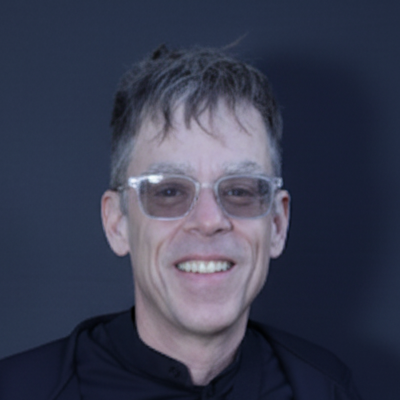
Founder & CEO, Futureproof Music School

Every electronic music producer alive today is standing on the shoulders of artists who literally invented the sounds we take for granted. That sub-bass you love? Someone figured it out first. That sidechain pump? It wasn't always obvious.
I've spent years studying these artists, not as a historian, but as a producer trying to understand why certain sounds hit so hard. Here's what I've learned about the artists who shaped electronic music, and more importantly, what you can actually take from each of them to level up your own productions in 2026.
The Architects: They Built the Instrument Before Playing It
Kraftwerk. The Sound of the Machine
Kraftwerk didn't just make electronic music. They invented the idea that machines could be the music.
Formed in Dusseldorf in the early 1970s, Ralf Hutter and Florian Schneider built their own instruments, coded their own sequencers, and created an entire aesthetic around human-machine interaction. "Autobahn," "Trans-Europe Express," "The Robots", these tracks sound deceptively simple, but that simplicity is the point.
What to steal: Restraint. Kraftwerk proved that a four-bar synth loop with the right timbre and rhythm can be more powerful than a hundred layers. Next time you're stacking sounds, try stripping back to one or two elements and making them perfect.
Giorgio Moroder. The Heartbeat of Dance Music
When Giorgio Moroder produced Donna Summer's "I Feel Love" in 1977, he essentially invented modern dance music. That pulsing, sequenced bassline over four-on-the-floor drums was genuinely revolutionary. Brian Eno reportedly told David Bowie it was "the sound of the future", and he was right.
Moroder's influence runs through disco, Italo, synthwave, and deep into today's house and techno. He proved electronic production could carry genuine emotion.
What to steal: The power of a driving, repetitive bassline. Moroder showed that if your low-end groove is hypnotic enough, you don't need constant melodic changes to keep a listener locked in. Program a 16-step bass sequence and build everything around it.
Jean-Michel Jarre. The Architect of Scale
Jarre's "Oxygene" (1976) wasn't just an album, it was proof that synthesizers could create entire worlds. His layered, evolving pads and melodic sequences turned electronic music into something cinematic and vast.
His live shows, featuring massive laser displays and audiences of hundreds of thousands, set the template for the spectacle-driven electronic events we see today.
What to steal: Atmosphere and space. Jarre was a master of letting sounds breathe. Use long reverb tails, slow filter sweeps, and gradual evolution to create depth in your mixes. Not everything needs to hit hard, sometimes the empty space between sounds is where the magic lives.
The Revolutionaries: They Broke the Rules That Didn't Exist Yet
Daft Punk. Where Funk Meets the Future
Thomas Bangalter and Guy-Manuel de Homem-Christo didn't just make French house popular, they made electronic music cool in a way nobody had before. "Homework" (1997) was raw and funky. "Discovery" (2001) was polished and euphoric. "Random Access Memories" (2013) won Album of the Year at the Grammys.
Even after their breakup in 2021, their influence hasn't faded one bit. Fortnite launched The Daft Punk Experience in 2025 (Epic Games' biggest-ever in-game musical event) and their catalog saw a 2,650% sales spike after the split announcement. Their DNA is in everything from The Weeknd's production to the French house revival happening right now.
What to steal: Sampling as an art form. Daft Punk's genius was in how they chopped, pitched, and transformed soul and funk samples into entirely new creations. Take a vocal snippet, a guitar lick, a forgotten disco record, run it through effects, chop it, resample it until it becomes something unrecognizable and wholly yours.
Skrillex. The Sound of Controlled Chaos
Sonny Moore essentially brought dubstep to a global audience with "Scary Monsters and Nice Sprites" (2010). Love it or hate it, his aggressive sound design, impossible bass textures, and hyperactive arrangements changed what electronic music could sound like.
He's still evolving. His 2025 album, the characteristically titled F**k U Skrillex You Think Ur Andy Warhol but Ur Not!!, dropped 34 tracks spanning dubstep, garage, ambient, and hip-hop. It's his final release on Atlantic Records before going independent. He's headlining Lollapalooza and Bonnaroo in 2026.
What to steal: Sound design as identity. Skrillex's signature isn't a genre. it's a texture. His bass sounds are unmistakable because he spends enormous time designing them from scratch. Open your synth, start with a basic waveform, and spend an hour just mangling it with FM synthesis, distortion, and resampling until you find sounds nobody else has.
Aphex Twin. The Beautiful Weird
Richard D. James operates on a different plane from most producers. "Selected Ambient Works 85-92" is one of the most influential electronic albums ever made. His catalog spans blissful ambient, face-melting acid techno, drill-n-bass chaos, and everything in between.
What makes Aphex Twin essential listening is his approach to rhythm and melody: nothing is quite predictable, nothing is quite comfortable, and yet it all makes perfect emotional sense.
What to steal: Irregular rhythms. Most electronic music is locked to a grid. Aphex Twin proved that slightly off-kilter timing, unusual time signatures, and unexpected rhythmic variations create tension and interest that quantized beats simply can't. Try nudging your hi-hats off the grid, or programming a melody that doesn't resolve where you expect it to.
The Genre Shapers: They Defined the Sound of the Dancefloor
Carl Cox. The Heartbeat of Techno
Carl Cox has been behind the decks for over four decades, and his energy hasn't dimmed. His style, driving techno with acid lines, tribal percussion, and relentless momentum, defined what a techno set should feel like. His legendary residency at Space Ibiza set the standard for club culture.
What to steal: Energy management. Cox is a master of building tension across a set, and producers can apply the same principle within a single track. Think about your arrangement as a journey: establish groove, build tension, release, rebuild. Every section should serve the arc.
Bonobo. The Organic Machine
Simon Green's productions blur the line between electronic and acoustic music. Albums like "Black Sands" and "Fragments" layer live instrumentation (strings, woodwinds, field recordings) with electronic beats and bass. The result feels both engineered and alive.
What to steal: Texture layering with organic sounds. Record something real (a door closing, rain on a window, your own breathing) and layer it beneath your synths. It adds a dimension of realism that pure synthesis can't achieve.
Brian Eno. The Inventor of Ambient
Eno literally coined the term "ambient music" and then proved the concept with albums like "Music for Airports" (1978). His approach was philosophical as much as musical: create sound that could be "as ignorable as it is interesting."
His generative music concepts (using systems and rules to create ever-evolving compositions) anticipated algorithmic and AI-assisted music production by decades.
What to steal: Generative thinking. Set up a system, randomized arpeggios, probability-based triggers, evolving LFOs, and let it run. Record the output and curate the best moments. Some of your most interesting musical ideas will come from processes you didn't fully control.
The New Guard: 2026's Sound is Being Written Now
The electronic scene in 2026 is more diverse than ever, and the Grammy Awards this year told the story perfectly. FKA twigs won Best Dance/Electronic Album for EUSEXUA, Tame Impala took Best Dance/Electronic Recording for "End of Summer," and Gesaffelstein won Best Remixed Recording for his take on Lady Gaga's "Abracadabra."
Meanwhile, the rising class is rewriting the rules:
- DJ Fucci is merging dembow, techno, cumbia, and industrial from Mexico City, creating percussive soundscapes that refuse to sit in a single genre
- Azu Tiwaline blends North African rhythms with dub and techno, drawing on Tunisian-Berber traditions to create hypnotic, percussion-driven music
- Baalti samples classic Indian records and fuses them with UK bass pressure, bridging the traditions of West Bengal and the UK rave scene
- NLI coined "fractal techno", a hybrid of industrial, acid, and hard psy-trance that's gaining serious momentum in London
- LIGHTLEAK hit #1 on Beatport's House chart by making minimal deep tech that's bright, groovy, and packed with real dancefloor personality
What to steal from all of them: Cultural specificity. The most exciting producers in 2026 aren't trying to sound like everyone else, they're pulling from their own musical heritage, their own geography, their own life experience. Your most original work will come from the musical influences that are uniquely yours.
AI Meets Production: The New Creative Partner
One of the biggest shifts in electronic music production in 2026 is the rise of AI as a creative tool. This isn't about AI replacing producers. it's about AI handling the tedious work so you can focus on the creative decisions that matter.
Tools like Suno v4 can generate full arrangements from text descriptions. Soundverse Agent interprets natural language commands to execute complex production workflows. AI-driven mixing and mastering services optimize loudness and balance in minutes.
But here's the thing: the artists on this list didn't become legendary because of their tools. Kraftwerk built their own synthesizers. Aphex Twin programmed custom patches. Daft Punk sampled forgotten records. The technology was always secondary to the idea.
The best producers in 2026 will use AI the same way, as a powerful assistant that accelerates creative exploration, not a replacement for taste, vision, and artistic identity.
The Common Thread
Look at every artist on this list, from Kraftwerk to NLI. The common thread isn't a genre, a tempo, or a piece of gear. It's this: each of them developed a sound that was unmistakably theirs.
That's the real lesson. Technology changes. Genres come and go. DAWs get better every year. But the artists who endure are the ones who found their voice and committed to it.
So study these producers. Steal their techniques. But ultimately, use what you learn to build something that sounds like you.
That's the only signature style that matters.
Frequently Asked Questions
Who are the most influential electronic music producers of all time?
The most influential electronic music producers include Kraftwerk (pioneers of synthesizer-based music), Giorgio Moroder (inventor of modern dance music production), Daft Punk (masters of sampling and French house), Aphex Twin (experimental electronic genius), and Brian Eno (creator of ambient music). Each developed signature production techniques that shaped entire genres and continue to influence producers today.
What production techniques can I learn from famous electronic music artists?
Famous electronic artists teach invaluable production lessons: Kraftwerk demonstrates the power of restraint and minimal arrangement. Daft Punk shows how creative sampling can transform existing recordings into entirely new works. Skrillex exemplifies advanced sound design as artistic identity. Bonobo proves that layering organic recordings with electronic elements creates rich, unique textures. And Brian Eno's generative music concepts show how setting up randomized systems can produce unexpected creative results.
How is AI changing electronic music production in 2026?
In 2026, AI tools like Suno v4 and Soundverse Agent are transforming electronic music production by handling technical tasks such as mixing optimization, arrangement generation, and sound design exploration. However, the technology works best as a creative partner rather than a replacement for artistic vision. The most successful producers use AI to accelerate experimentation and handle repetitive technical work while maintaining their own creative direction and signature sound.
John von Seggern
Founder & CEO, Futureproof Music School
Electronic music producer, DJ, and educator. John founded Futureproof Music School to build the online school he wished existed when he was learning: live mentorship, modern tools, and a real community. Deep background in bass music, sound design, and music technology.
Ready to level up your production?
Join Futureproof for live mentorship, AI coaching, and a community of producers.
Start your 14-day free trial