The Best AI Mixing and Mastering Tools in 2026, Ranked

Founder & CEO, Futureproof Music School
Last updated August 2026. Next review: September 2026.
AI mixing and mastering tools now handle a real chunk of the finishing work on a track. The picture in 2026 splits one way: they work well when a person drives them, and they turn mediocre the moment you press one button and walk away.
The strongest evidence available says exactly that. In a 472-listener blind test run by Benn Jordan, two human engineers finished first and second, Ozone’s one-click master finished last, and the same Ozone plugin driven by hand finished fourth.
The rankings
Strongest toolbox: iZotope Ozone 12
Working mastering engineers genuinely use its modules. Almost none of them use its AI suggestions.
Best during the mix: Sonible smart:bundle
Its plugins fix EQ and dynamics problems track by track, while you still have a mix to change.
Best for releasing a lot of tracks: LANDR
The cloud engine masters a track in under a minute and keeps a whole EP consistent.
Easiest one-click master: eMastered
Upload, preview, download. Nothing to install.
Best free tool: Matchering
Open source, runs on your own computer, and it beat every paid AI service in that blind test.
Already own Logic: Mastering Assistant
It comes with Logic Pro, and it handles demo bounces better than its absence from most roundups suggests.
Check your mix first, free: Futureproof Mix Assistant
Ours, free, and it does the one job the others skip: telling you what to fix before you master.
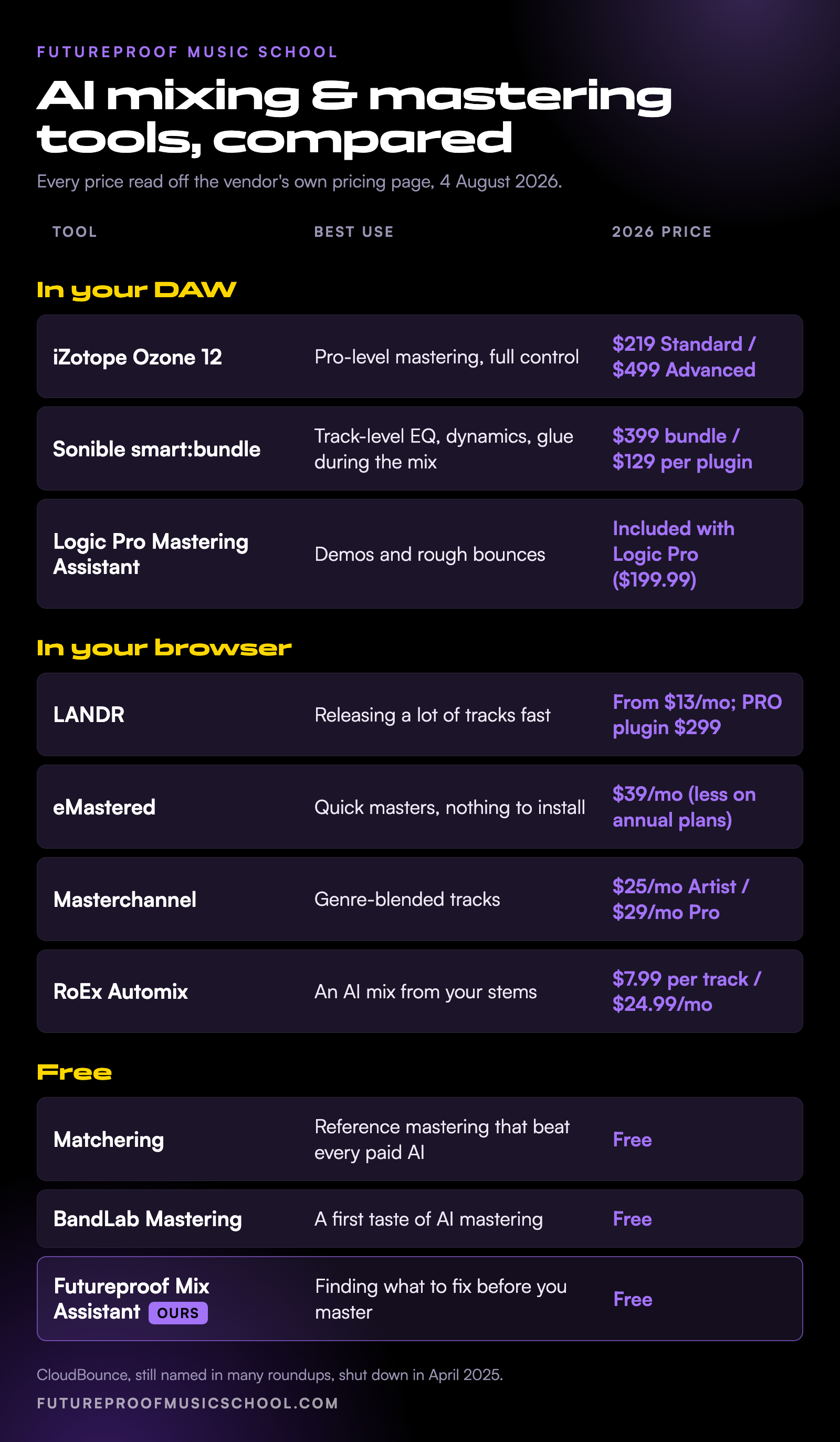
Full analysis and a price comparison below.
How we researched this
We read everything we could find on the internet about these tools (community threads, blind tests, video shootouts, and the comment sections under them) and aggregated it, weighted toward the last twelve months. Every price was read off the vendor’s own pricing page on 4 August 2026, in US dollars. We also check who sponsors each comparison, because sponsorship predicts the winner with uncomfortable reliability.
The tools, one by one
iZotope Ozone 12
Ozone is the mastering suite working engineers actually have installed, and its modules (EQ, compression, imaging, limiting) get used at the top of the industry. Two additions carry the 2026 release. Stem EQ pulls the vocal, drums, or bass out of a finished stereo file so you can EQ each one on the master bus. The Unlimiter restores dynamics to audio that arrived already crushed. Both Stem EQ and the full module set need the Advanced edition.
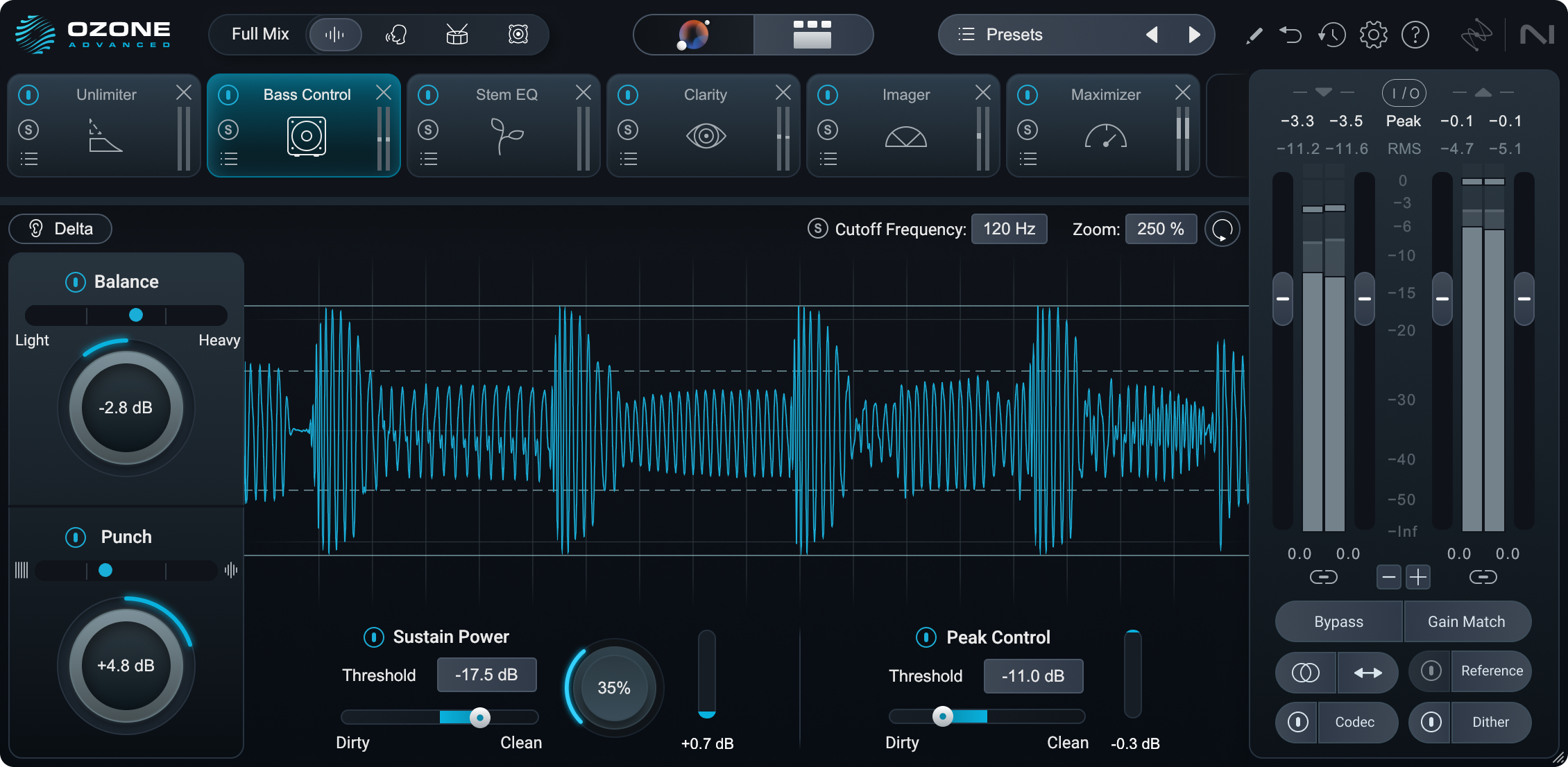
The AI assistant is a different product in the same box. In the most-cited engineering thread we read, a working mastering engineer said pros “would not touch those suggested starting points with a stick.” Regular users report it runs bright and cuts bass hard enough that they routinely push the low end back up afterward, worth knowing if your genre lives on sub. Treat its chain as a draft you edit, not a verdict.
Best for: producers who master their own tracks and want full control. Price: Standard $219, Advanced $499. Verified students and faculty get 50 percent off.
Sonible smart:bundle
These plugins work during the mix, not after it. The bundle covers smart:EQ 4, smart:comp 3, smart:limit, smart:reverb 2, smart:deess, and smart:gate, and each one listens to the track it sits on and proposes transparent, genre-aware settings.
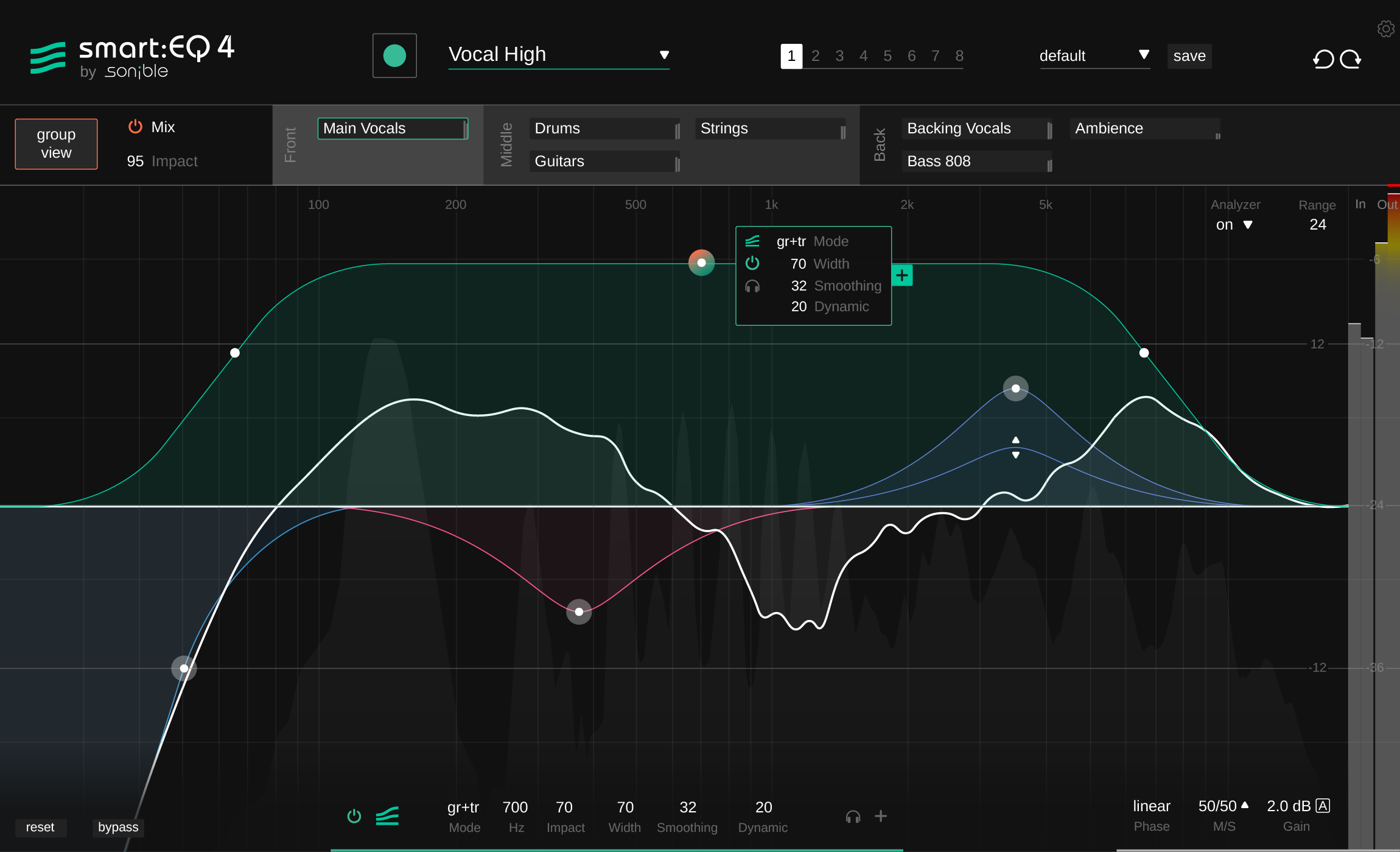
The reason to care is smart:EQ 4’s Group View: up to ten instances listen to each other and carve out space so your kick, bass, and synths stop fighting over the same frequencies. That skill normally takes years to build by ear. smart:comp 3 suggests threshold, ratio, attack, and release in one click, and keeps the tonal balance steady while it compresses.
Best for: producers who freeze up on mixing decisions, or anyone mixing on a deadline. Price: $399 for the bundle, $129 per plugin.
LANDR
LANDR runs its mastering engine in the cloud and also sells a plugin that brings the same engine into Ableton, Logic, FL Studio, or Pro Tools. Upload a stereo mix and a master comes back in under a minute, with three intensity levels and an A/B against the original.
Its quiet advantage is batch work. Run a six-track EP through with the same settings and the whole release comes out consistent, which is hard to match by hand.
Best for: producers releasing a steady stream of tracks. Price: the Mastering Plugin PRO is $299 one time. Studio subscriptions run $13, $20, or $25 a month, dropping to $8.25, $12, and $16 on annual plans.
eMastered
eMastered lives entirely in the browser. Upload a WAV or MP3, get a genre-matched master back in about a minute, then shape it with intensity, EQ, and stereo width controls. No install, no plugin.
It also does reference matching: hand it a track you want yours to sound like and it aims for that target. eMastered does not publish which genres its matching covers, so use the free preview to judge it on your own material before paying.
Best for: beginners who need a quick, decent master with zero setup. Price: $39 a month. The lower advertised rates ($19 and $9 a month) are annual commitments billed up front.
Masterchannel
Masterchannel reads the genre influences in a track before mastering it, which makes it the one to try if your music sits between styles. A track halfway between trap and techno will not get forced into one genre’s curve.
It has no free tier. You can preview a master before paying, but downloads need a paid plan.
Best for: producers making genre-blended tracks. Price: Artist $25 a month ($180 a year), Professional $29 a month ($228 a year).
RoEx Automix
Automix is an AI mix engineer rather than a mastering service. Feed it up to 32 stems (kick, bass, vocals, synth groups) and it builds a full mix: gain staging, panning, EQ, compression, reverb.
Treat the result as a second opinion on your own mix, not a replacement for it. RoEx also runs Mix Check Studio, where the mix check itself is free.
Best for: a sanity check on your multitrack balance. Price: $7.99 per download, or Pro at $24.99 a month ($149.99 a year). The desktop app is free while in beta.
Logic Pro Mastering Assistant
If you own Logic, you already own an AI mastering tool. It analyzes the stereo output, applies corrective EQ, controls dynamics, and brings the track up to commercial loudness.
In the biggest Logic community discussion of it we found, the consensus landed in a specific place: excellent for demos, work-in-progress bounces, and client check-ins, not for a release. Regular users recommend keeping the Auto EQ below 50 percent rather than accepting it at full strength.
Best for: Logic owners who want to hear their track loud and balanced before deciding if it needs real mastering. Price: included with Logic Pro ($199.99).
Matchering
Matchering is free, open source, and it runs on your own computer: no upload, no account, no subscription. Give it your track plus a reference track you want to sound like, and it matches the spectral balance and loudness.
In Benn Jordan’s blind test it finished third, ahead of every commercial AI mastering service in the study. Jordan argues several paid services are running tweaked versions of this same open-source engine, which is worth sitting with before subscribing to anything.
Best for: anyone willing to trade a friendly interface for free results that measure up. It rewards knowing what you want to sound like. Price: free.
BandLab Mastering
BandLab’s browser mastering is free and takes about a minute. Pick one of four presets, set the intensity, done.
The catch: it applies a fixed processing profile rather than analyzing your specific mix the way Ozone or LANDR do. That makes it a fine first taste of what AI mastering does to your track, and not much more.
Best for: hearing what AI mastering sounds like on your own music without spending anything. Price: free. A membership lifts the track-length cap.
Futureproof Mix Assistant
Full disclosure: this one is ours. It earns its slot by doing the one job nothing else on this page does. Every other tool processes your audio. The Mix Assistant tells you what is wrong with it first, free, in the browser.
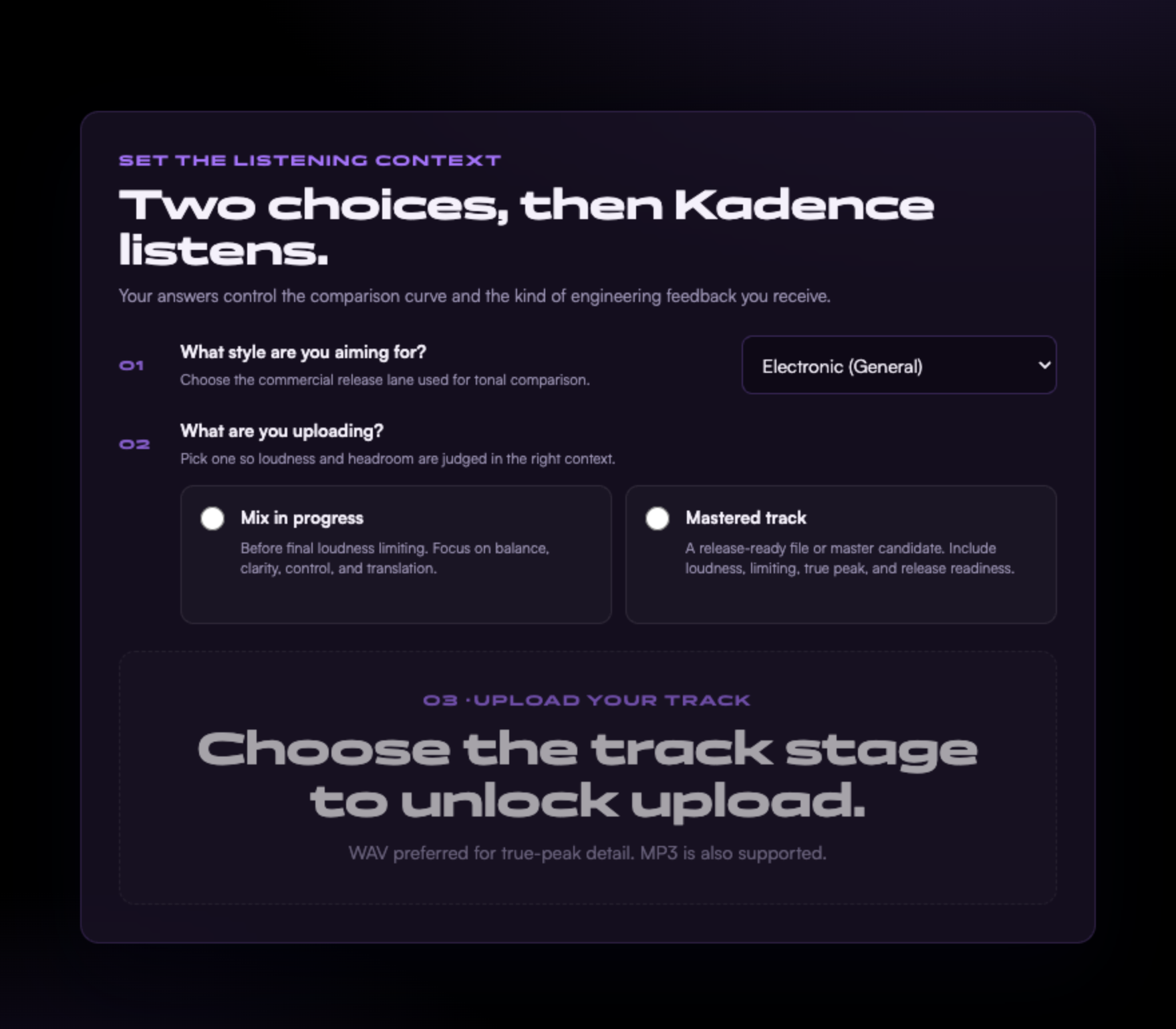
Upload a track and you get graded meters for loudness, headroom, punch, and stereo width, plus a tonal-balance chart against targets for your genre. It flags specific problems, like mud in the low mids or a sub running hot. Then you can ask Kadence, our AI coach, questions about your actual numbers, and it answers in context rather than reciting generic mixing advice.
Best for: finding out what to fix before you spend money mastering. Price: free. No install, no account, no card.
A warning about distributor mastering
If you distribute through DistroKid, watch for the Mixea mastering checkbox at upload. Producers have paid human engineers, delivered the finished master, and had it silently re-processed because that box stayed checked. If you already have a master you like, decline every “enhance my audio” option your distributor offers.
AI vs a human engineer
In that same blind test, the humans finished first and second, and it was not close. What you pay an engineer for is not EQ moves. It is an experienced second set of ears that can say “your vocals are boxy, fix the mix and send it again,” which is the one thing an algorithm cannot do.
The affordability argument has also weakened. Competent human mastering now runs $50 to $100 a track, and in one blind test a $60 freelancer tied for first place. If the release matters, hire a human. For streaming singles, demos, and works in progress, AI is genuinely fine.
Which tool should you pick?
- Full control inside your DAW: iZotope Ozone 12.
- Speed and volume across many releases: LANDR.
- Struggling with the mix itself, not the master: Sonible smart:bundle.
- One-click masters in a browser: eMastered, or Masterchannel for genre-blended tracks.
- Mixing from stems and want help there too: RoEx Automix.
- Already own Logic: its built-in Mastering Assistant, for demos.
- Best free master: Matchering, if you have a reference track.
- Just curious, free: BandLab.
- Want to know what is wrong with your mix first, free: our Mix Assistant.
AI is only as good as the mix you feed it. A clean, balanced mix translates; a broken one just gets louder. That is why AI will not replace producers any time soon, and it is why Futureproof exists: to build the ear and the fundamentals the tools cannot fake.
The fastest way to see how we teach is to try our free apps, all in the browser. And if you want structure around it, the free trial gets you courses, live workshop feedback, and Kadence any time you are stuck.
Frequently Asked Questions
Is AI mastering as good as a human engineer?
Not yet. In the 472-listener blind test, humans took the top two spots. But for streaming singles, demos, and most electronic releases, AI mastering is more than good enough, and loudness normalization on Spotify and Apple Music flattens some of the remaining difference. For vinyl, complex material, or a release that matters, hire a human.
Do you need both mixing AI and mastering AI?
They solve different problems, so they stack. Mixing AI like Sonible works on individual tracks during the mix. Mastering AI like Ozone or LANDR polishes the finished stereo file. If you are starting out, pick one for the job in front of you. Most people start with mastering, because the improvement on a decent mix is obvious right away.
Can AI mastering fix a bad mix?
No. Mastering makes whatever is in the mix louder, including the problems. If the low end is muddy, fix the muddy mix first. If the mix feels small, parallel compression will do more than any mastering preset. Our free Mix Assistant finds the problems so you can fix them before mastering.
What is the best free AI mastering tool?
Matchering, if you have a reference track: it beat the paid services in blind testing and runs on your own machine. BandLab is easier but applies fixed presets. And before you master anything, our free Mix Assistant tells you what to fix first, which is the step most producers skip.
Is LANDR or eMastered better?
LANDR for volume: subscriptions, a DAW plugin, and batch consistency across a release. eMastered for simplicity: fast browser masters with easy tone controls and nothing to install. If you release a lot, LANDR. If you just want a quick master today, eMastered.
What changed in this update
August 2026: rebuilt on aggregated community evidence and cut the length by two thirds so the rankings come first. Corrected five prices against vendor pages. Added Logic Pro’s Mastering Assistant, Matchering, and the distributor-mastering warning. Noted that CloudBounce has shut down.
John von Seggern
Founder & CEO, Futureproof Music School
John von Seggern is the founder and CEO of Futureproof Music School. He holds an MA in digital ethnomusicology (the anthropology of music on the internet) from UC Riverside, and a BA in Music, magna cum laude, from Carleton College. A techno producer and DJ since the late 1990s, he released as John von on his own net.label Xeriscape Records while working at Native Instruments, where he co-authored the MASSIVE synth manual. He contributed sound design to Pixar's WALL-E (2008), was a member of Jon Hassell's late-career Studio Group on Hassell's final two albums, ran Icon Collective's online program with Max Pote for eight years before Icon closed in May 2025, and authored three books on music technology including Laptop Music Power!. He architected Kadence, the AI music coach at the core of Futureproof.
Want more Futureproof in your Google results?
Ready to level up your production?
Join Futureproof for live mentorship, AI coaching, and a community of producers.
Start your 14-day free trial