EDM Chord Progressions: 6 Famous Tracks Broken Down (Avicii, Guetta, Garrix)

Marketing Director & Bass Music Mentor
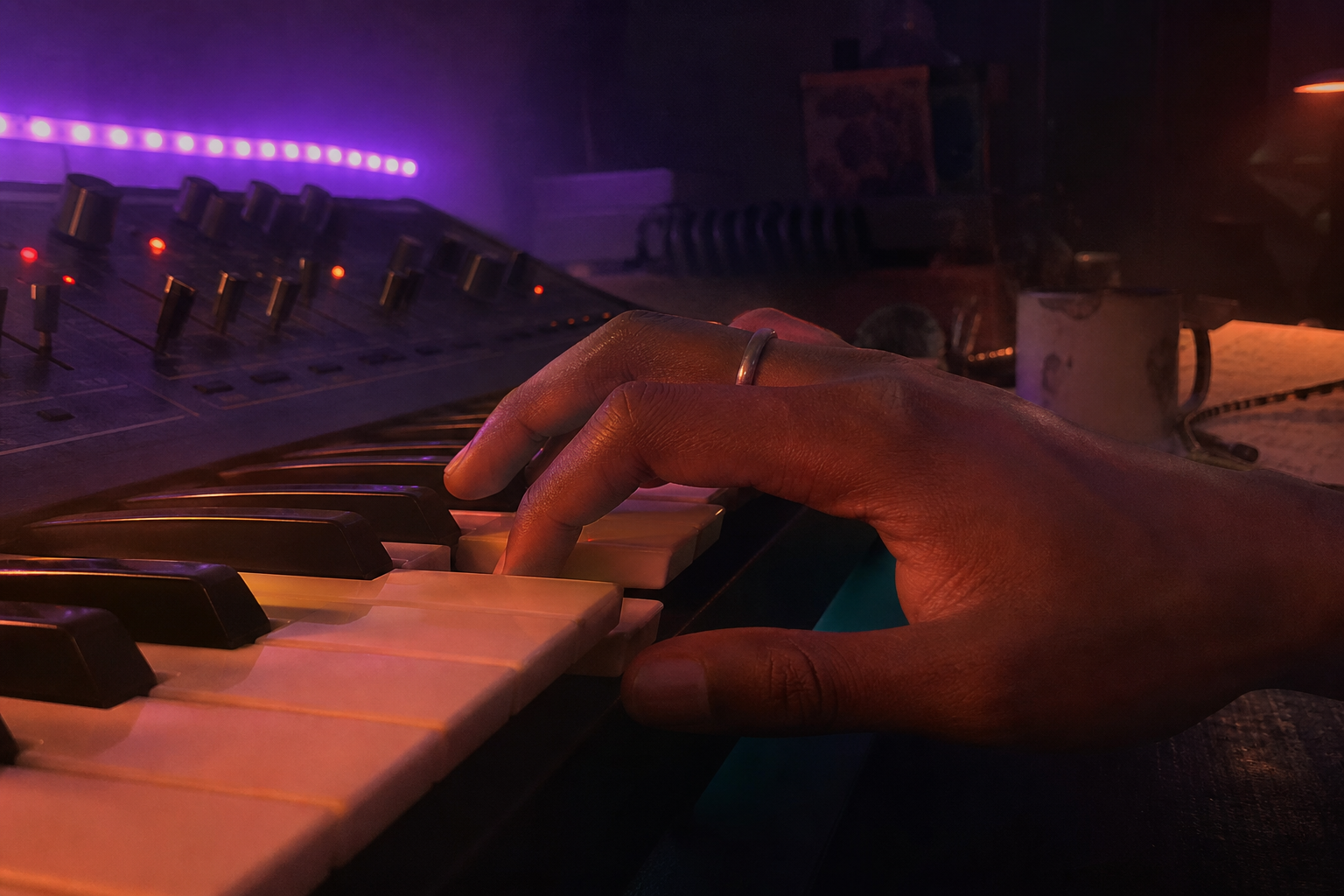
The most common EDM chord progressions are i-III-VII-VI (Levels), iii-vi-IV-V (Titanium), IV-I-vi-V (Sweet Nothing), and I-V-vi-IV (Don't You Worry Child), usually held for two bars per chord in minor keys like A minor or C# minor at 120-128 BPM. This guide breaks down six famous tracks, with the videos.
Chord progressions are the harmonic backbone of any piece of music, and EDM is no exception. While electronic music is often celebrated for its rhythmic complexity and sound design, the chord progressions underneath all that sonic excitement play a crucial role in creating emotional impact and keeping listeners engaged. Understanding how EDM chord progressions work can transform your productions from a collection of sounds into cohesive, emotionally resonant tracks.
Why Chord Progressions Matter in EDM
Genre Specs at a Glance
| Attribute | Detail |
|---|---|
| Most common progressions | i-III-VII-VI (Levels), iii-vi-IV-V (Titanium), IV-I-vi-V (Sweet Nothing), I-V-vi-IV (the four-chord anthem) |
| BPM context | 120-128 (house/trance), 140-150 (melodic dubstep), 87/174 (halftime DnB) |
| Common keys | A minor, F# minor, G minor, C minor (emotional/dark); C major, G major (uplifting) |
| Typical chord length | 2 bars per chord (4-chord loop = 8 bars) |
| Signature moves | Suspended 4ths, add9 extensions, borrowed chords from parallel minor |
In many genres, chord progressions are obvious and front-and-center. In EDM, they're often hidden beneath layers of sound design, but they work just as hard. The chord progression is what gives a track its emotional character, whether that's euphoric and uplifting, dark and menacing, melancholic and introspective, or energetic and driving.
Some of the most memorable EDM tracks are built on surprisingly simple chord progressions. What makes them powerful isn't complexity but rather how those chords are voiced, timed, and combined with the surrounding sonic elements. A four-chord loop can be transformed into something transcendent through the right combination of sound design, rhythm, and arrangement.
Basic Music Theory for EDM Producers
You don't need to be a classically trained musician to understand chord progressions, but a few fundamentals will go a long way.
A chord is three or more notes played simultaneously. The most basic chords in Western music are triads: three notes built by stacking intervals. A major triad sounds bright and happy. A minor triad sounds darker and more emotional.
Chords are typically built from scales, the most common in EDM being the major scale and the natural minor scale (also called the Aeolian mode). When you're working in a specific key, you have a set of seven chords available, each built from one of the seven notes in that key's scale.
These chords are typically notated with Roman numerals (I, II, III, IV, V, VI, VII). Upper case means major; lower case means minor. In C major, the I chord is C major, the ii chord is D minor, the IV chord is F major, the V chord is G major, and the vi chord is A minor.
The Most Common EDM Chord Progressions (Track-by-Track Breakdowns)
Certain progressions appear again and again across EDM subgenres. The fastest way to internalize them is not a chart of Roman numerals. It is hearing them inside the tracks that made them famous. Here are six breakdowns with the key, the exact loop, and what makes each one work.
"Levels" by Avicii: i-III-VII-VI in C# Minor
The Levels loop is C#m, E, B, A: four chords pulled straight from the C# natural minor scale (TheoryTab analysis). On paper that is a minor progression. In your ears it is pure euphoria, because three of the four chords are major. The famous synth riff does not play pads over these chords. It arpeggiates them, so the melody and the harmony are the same object.
Notice how everything pumps against the kick. That movement comes from sidechain compression, not from the chords themselves. If that pumping sound is new to you, our sidechaining guide covers the exact setup.
"Titanium" by David Guetta ft. Sia: iii-vi-IV-V in Eb Major
Titanium runs Gm, Cm, Ab, Bb in Eb major (TheoryTab analysis). Look closely: the loop never plays the home chord of Eb. It starts on the iii chord, G minor, and circles the tonic without ever landing on it. That is why the chorus feels like it hovers. The harmony refuses to resolve, so Sia's vocal has to carry the resolution, and the tension never fully releases.
The lesson: leaving the I chord out of your loop is one of the simplest ways to keep an entire section floating.
"Sweet Nothing" by Calvin Harris ft. Florence Welch: IV-I-vi-V in C Major
Sweet Nothing cycles F, C, Am, G: the same four chords as a thousand pop songs, but starting on IV instead of I. Because the tonic arrives in second position, it never feels like home base. The loop keeps pushing forward, which matches the push-pull of the lyric perfectly.
This is the big takeaway from comparing these tracks: rotation decides the mood. The same four chords in a different order are a different emotional engine.
"Don't You Worry Child" by Swedish House Mafia: I-V-vi-IV
The chorus loop is D, A, Bm, G (TheoryTab analysis): the classic I-V-vi-IV anthem progression. Its familiarity is the feature, not a flaw. Fifty thousand people can sing along to a progression their ears already know, and Swedish House Mafia built one of the biggest festival closers of all time on exactly that bet. Many Zedd-era anthems lean on the same family.
"Animals" by Martin Garrix: Minimal Minor Harmony for Festival Buildups
Animals sits in F minor at 128 BPM and barely moves: mostly Fm, with touches of Ab and Cm (TheoryTab analysis). That is the point. Big-room and festival tracks often run on one or two chords so the lead riff, the buildup, and the drum programming carry all the energy. The same idea drives minimal and tech house, where one or two chords with rhythmic and timbral variation create hypnotic movement rather than harmonic progression in the traditional sense.
"Clarity" by Zedd: Suspended Chords and Faster Changes in Ab Major
Clarity is the sophisticated one in this list. It sits in Ab major, changes chords faster than the loops above, and leans hard on suspended chords that create tension and resolve it over the bar (TheoryTab analysis). If the other tracks here prove you can win with four chords, Clarity proves what happens when you add harmonic motion back in: the track feels like it is constantly reaching for something.
Steal any of these loops as a starting point. Drop the chords into your DAW, match the key to your vocal or lead, and build from there.
Chord Voicings in EDM
How you voice your chords (which specific notes you choose and in which octave you play them) can dramatically change the feel of the same progression.
In EDM, open voicings (spreading chord notes across multiple octaves) often sound bigger and more spacious than tight, close voicings. Supersaws and pads are often voiced very openly, which contributes to that characteristic huge EDM sound.
Inversions (placing a chord note other than the root in the bass) can create smoother voice leading between chords. Rather than jumping from one root note to another, the bass can move stepwise while the upper harmony changes.
Shell voicings (using just the root and one other note, often the 7th or 3rd) are common in EDM contexts where the full chord information might create frequency clashes with other elements.
Chord Rhythm and Timing in EDM
In EDM, when you play your chords is often as important as which chords you play. Chord rhythms (the rhythmic pattern with which you trigger chord changes) create the groove and momentum of your track.
Sustained chords (long, held notes) create a sense of space and allow the rhythm section to carry the energy. Staccato chords (short, punchy) add rhythmic energy and drive. Arpeggiated chords (chord notes played sequentially) create movement without requiring complex sound design.
The tempo and placement of chord changes also matters. Changing chords every bar creates constant harmonic movement. Holding a single chord for two or four bars (vamp) can create a hypnotic effect. Changing chord halfway through a bar creates syncopation and surprise.
Applying This to Specific EDM Genres
Different EDM subgenres have different harmonic conventions.
Trance and progressive house tend to favor emotional, sweeping progressions, often in minor keys, with long chord durations and lush pad sounds. The harmonic journey is a key element of the emotional experience.
House and tech house vary widely. Deep house often uses jazz-influenced progressions with extensions (7ths, 9ths). Tech house and minimal often use one or two chords with emphasis on rhythm and texture.
Dubstep and bass music frequently use slower harmonic movement with more emphasis on bass melody and sound design. The chords provide context for the bass rather than carrying the primary musical interest.
Drum and bass, particularly liquid DnB, often features quite melodic and emotionally rich chord progressions that provide a striking contrast to the intense drum programming.
How to Learn EDM Chord Progressions by Ear
The best way to internalize EDM chord progressions is to analyze music you love. When you hear a track that moves you emotionally, try to identify the chord progression. Slow it down, loop sections, and figure out what's happening harmonically.
Ear training also develops your ability to hear and reproduce chord progressions. Regular practice with interval recognition and chord identification makes you more fluent in the harmonic language of music.
Experiment freely in your productions. Try transposing familiar progressions to minor keys, substitute chords from outside the scale for surprise and tension, and explore modal progressions that don't fit neatly into major/minor tonality.
Essential Tools and Plugins
| Tool / Plugin | Use case |
|---|---|
| Scaler 3 | Chord detection, voice leading, and key-locked jamming |
| Captain Chords (Mixed In Key) | Chord progression generation with genre presets |
| Ableton Max for Live (Chord device) | Free chord stacking and modal harmonization |
| Chordz (Free VST) | Trigger chord progressions from single keys |
| iZotope Ozone Imager / Saturator | Widening pad stacks behind chord progressions |
| Omnisphere / Diva / Serum | Classic EDM chord pad sounds |
Frequently Asked Questions
Why are chord progressions so important in EDM?
Chord progressions shape the emotional impact of every electronic track, guiding listeners through tension and release. They form the harmonic foundation for melodies, basslines, and rhythms, ensuring all elements work together to create an immersive and memorable experience.
What are the most popular chord progressions in EDM?
The most popular EDM chord progressions include i-III-VII-VI (heard in Levels by Avicii), iii-vi-IV-V (Titanium by David Guetta), IV-I-vi-V (Sweet Nothing by Calvin Harris), and I-V-vi-IV (Don’t You Worry Child by Swedish House Mafia, also the backbone of many Zedd-era anthems). Big-room festival tracks like Martin Garrix’s Animals often run on minimal one- or two-chord minor vamps instead. Each track is broken down with its video earlier in this post.
How can I make my chord progressions sound more professional?
Try three techniques: use inversions and open voicings to create smoother transitions, replace basic triads with seventh chords (Maj7 or min7) for richer harmonic color, and experiment with suspended chords (sus2 or sus4) to build tension in your buildups and breakdowns.
Max Pote
Marketing Director & Bass Music Mentor
Max Pote is a professional bass music producer who performs and releases under the name Protohype. He has more than a decade of releases on major bass-music labels (Firepower Records, SMOG, Never Say Die, Rottun, Deadbeats), festival appearances at EDC Las Vegas and Lost Lands, and a feature credit on Tom Morello's 2021 album The Atlas Underground Fire. He was an early Icon Collective alumnus and later returned as an instructor before co-founding Futureproof Music School. He leads marketing at Futureproof and mentors students on sound design, songwriting, and finishing tracks.
Want more Futureproof in your Google results?
Ready to level up your production?
Join Futureproof for live mentorship, AI coaching, and a community of producers.
Start your 14-day free trial