What Is a Bridge in a Song? Structure, Examples, and How to Write One

Marketing Director & Bass Music Mentor
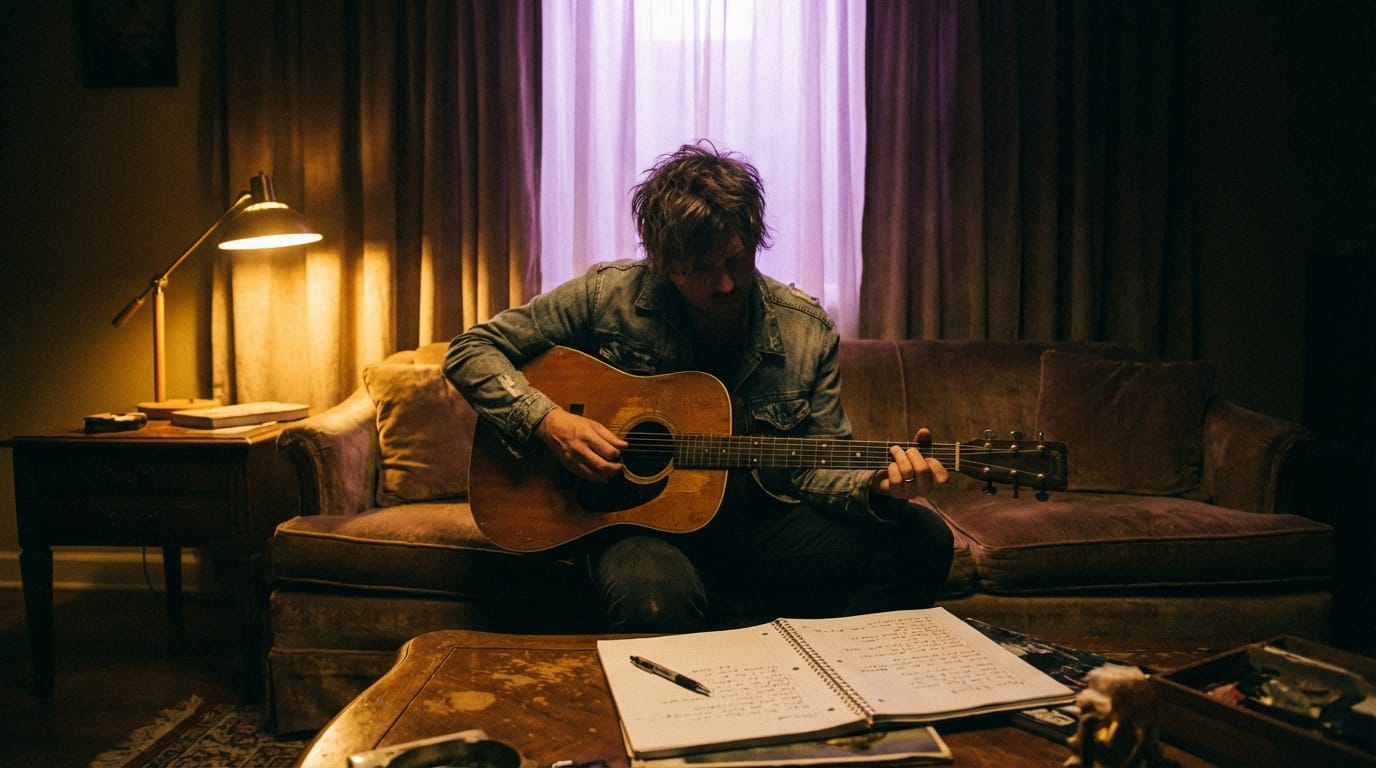
A bridge in a song is a contrasting section, usually placed between the second and third chorus, that introduces new chords, lyrics, or melody to break the verse-chorus pattern and add emotional lift before the final chorus. It's the "something different" moment that keeps a repetitive song from feeling stale.
Songwriters talk about bridges more than listeners think about them, but the listener feels a good bridge the instant it hits. It's the section that resets expectations, deepens the story, and earns the last chorus. If you've ever wondered what that sudden shift inside your favorite song is, that's the bridge. This guide covers what a bridge actually does, where it sits in a song, how it differs from a pre-chorus or breakdown, and how to write one that elevates your track.
Defining the Bridge
A bridge is a non-repeating section that appears once in a song, typically after the second chorus, introducing new melodic and harmonic material before returning to the final chorus. It breaks the loop.
Think of a standard pop song as a repeating pattern: verse, chorus, verse, chorus, repeat. After the second chorus, the listener has heard everything twice. Without something new, the third chorus loses impact. The bridge solves that problem. It steps outside the verse-chorus engine, introduces fresh material, then hands the energy back to the chorus with new weight behind it.
A bridge almost always lands in a different key area, uses chords not heard elsewhere in the song, and carries lyrics that add perspective rather than repeat the hook. It's the songwriter's chance to say the thing that couldn't fit anywhere else.
The Bridge vs. Other Song Sections
Unlike a verse (which repeats with new lyrics) or a chorus (which repeats identically), the bridge appears only once and contains material that doesn't return. It also differs from a pre-chorus, breakdown, or middle 8, though the terms overlap.
Here's how the sections relate:
- Verse: Recurring section with changing lyrics. Sets up the story.
- Chorus: Recurring section with identical (or near-identical) lyrics. Carries the hook.
- Pre-chorus: Short section between verse and chorus that builds tension.
- Bridge: Single, contrasting section that appears once, usually after the second chorus.
- Middle 8: British term for an eight-bar bridge. Functionally the same.
- Breakdown: Electronic music term for a stripped-back section, often before a drop. Can function like a bridge but usually doesn't introduce new lyrics or melody.
The bridge is the only section defined by its singularity. If it comes back, it's no longer a bridge.
Musical Characteristics of a Great Bridge
Strong bridges change at least two of these four elements: harmony (new chords or key), melody (new phrase shape), rhythm (new feel or time), and dynamics (louder, quieter, or differently orchestrated). Changing all four is dramatic; changing one is usually too subtle.
The goal of a bridge is contrast without disorientation. If it sounds like a different song, the listener checks out. If it sounds too similar to the verse, it doesn't register as a bridge at all. The sweet spot is recognizable shift.
Common moves include:
- Modulating to the relative minor or major (e.g., from C major to A minor)
- Dropping to the IV chord and sitting there (a classic move in 60s pop)
- Moving to a chord not used elsewhere in the song
- Cutting the rhythm section and letting a single instrument carry the melody
- Doubling the harmonic rhythm (chord changes every two beats instead of every two bars)
The bridge doesn't need to modulate to feel different. Sometimes a simple change from full band to piano and vocal is enough.
Lyrical Function of a Bridge
Lyrically, the bridge should either shift perspective, raise the emotional stakes, or provide a revelation that recontextualizes the verses and chorus. It's the "turn" in the song's narrative.
Verses tell you what happened. The chorus tells you how the singer feels. The bridge tells you something you didn't know yet. It might zoom out ("and here's what all this means"), zoom in ("and here's the specific moment I can't forget"), or flip the script ("and then I realized I was wrong").
Taylor Swift is famous for this approach. Her bridges are almost always where the song's real point lives. The same pattern appears in songwriters as different as Paul McCartney, Prince, and Max Martin. The bridge is where you earn the listener's full attention, so say the thing that matters most.
Famous Examples of Effective Bridges
Hearing great bridges in context is worth more than any description. These three songs each handle the bridge differently, from the Beatles' sixties modulation template to Taylor Swift's modern narrative payoff.
The Beatles' "Something" (1969) is a textbook example of a bridge that modulates. The verses sit in C major. The bridge shifts up to A major with "You're asking me will my love grow..." and the new key immediately feels uncertain, unresolved. When the song returns to the verse, the listener feels the relief of coming home. George Harrison wrote it. It's been covered more than any Beatles song after "Yesterday."
Taylor Swift's "All Too Well (10 Minute Version)" has one of the most discussed bridges of the last decade. It's where the song's anger finally surfaces after eight minutes of wistful recollection. The music barely changes, but the lyric does all the work: "And maybe we got lost in translation, maybe I asked for too much." The bridge is the emotional core, and the song is structured to earn it.
Journey's "Don't Stop Believin'" (1981) has an unusual structure: the full chorus hook ("Don't stop believin'...") doesn't actually appear until the final section, which functions as both bridge and chorus. Before that, the song cycles through verses and pre-choruses. When the bridge finally releases into the hook, the wait pays off. It's why the song still fills stadiums 45 years later.
Bridges in Different Genres
Bridge conventions vary by genre: pop and rock use a 4-8 bar contrasting section, hip hop often uses a beat switch or third verse, electronic music uses a breakdown, and jazz standards use the "B" section of AABA form.
Genre shapes what a bridge looks like, but the underlying purpose (a contrasting section that resets the listener before the final payoff) is universal.
In pop and rock, the bridge is typically 4 to 8 bars, sits after the second chorus, and modulates or introduces new harmonic material. In hip hop, a "bridge" might be a beat switch, a vocalist hook section in an otherwise rap-driven track, or a contemplative third verse. In electronic music, the breakdown (stripping down to one or two elements before building back up to a drop) fills the structural role of a bridge. In jazz standards using AABA form, the "B" section is literally called the bridge, and it's where the song modulates before returning to the A theme.
If you're writing in a specific genre, listen to five or six hit songs in that style and pay attention to what happens around the 2:00 to 2:30 mark. That's usually where the bridge lives.
Writing an Effective Bridge
Write the bridge last. Set up the song's main sections first (verse, chorus, pre-chorus), then ask: what does this song still need to say, and where's the emotional ceiling not yet hit? The bridge answers both.
A practical process:
- Finish the verse-chorus structure first. Get two verses and two choruses that work before you touch the bridge. You'll know what's missing.
- Choose a contrast move. Modulation, new chord, dynamic drop, rhythmic shift. Pick one or two, not all four.
- Write a lyric the rest of the song can't say. Shift perspective, raise the stakes, reveal something.
- Keep it short. 4 to 8 bars is standard. Long bridges lose the listener.
- Set up the return. The last bar of the bridge should make the listener hungry for the chorus. Often a dominant chord, a held note, or a lyrical cliffhanger.
Bridges are where amateur songwriters often give up and just loop another chorus. Every song that breaks through has a bridge that earns its place.
When a Song Doesn't Need a Bridge
Not every song needs a bridge. Many hits (especially in dance, folk, and minimalist indie) work fine with just verse and chorus, using arrangement changes, dynamics, or an extended outro to create contrast.
Bridges are a tool, not a requirement. Plenty of iconic songs skip them entirely. "Royals" by Lorde doesn't have a bridge. "Sweet Caroline" doesn't have a bridge. Most dance tracks rely on arrangement changes (adding or removing layers) instead of a lyrical bridge.
If your song feels complete without one, don't force it. If it feels repetitive on the second chorus, a bridge is likely the fix. Trust your ear.
Ready to Write Better Bridges?
The bridge is where songs stop being forgettable. It's also the hardest section to nail, because it has to feel new without feeling unrelated. The best way to get better is to write them, listen critically, and get feedback from producers and songwriters who've built songs that work.
If you want structured practice, feedback, and access to a community of working producers, Futureproof Music School offers a 14-day free trial with live workshops, a full course library, and Kadence, our 24/7 AI music coach trained on real production knowledge. Start writing bridges that earn the final chorus.
Max Pote
Marketing Director & Bass Music Mentor
Max Pote is a professional bass music producer who performs and releases under the name Protohype. He has more than a decade of releases on major bass-music labels (Firepower Records, SMOG, Never Say Die, Rottun, Deadbeats), festival appearances at EDC Las Vegas and Lost Lands, and a feature credit on Tom Morello's 2021 album The Atlas Underground Fire. He was an early Icon Collective alumnus and later returned as an instructor before co-founding Futureproof Music School. He leads marketing at Futureproof and mentors students on sound design, songwriting, and finishing tracks.
Want more Futureproof in your Google results?
Ready to level up your production?
Join Futureproof for live mentorship, AI coaching, and a community of producers.
Start your 14-day free trial